House Clearance in Seven Sisters

House clearance in Seven Sisters needs to be practical, orderly and respectful of the property, whether you are emptying a full house, clearing a single floor or dealing with selected rooms after a move or change in circumstances. We provide a commercial clearance service focused on removing household contents efficiently while keeping the process straightforward for the customer. The work can include furniture, general bric-a-brac, white goods and mixed domestic items, with the aim of leaving the space ready for its next stage.
Our service is designed for homeowners, landlords, tenants, executors and managing agents who need a clear plan rather than a rushed uplift. We can handle straightforward clearances and more involved jobs where access, sorting or coordination matter. If you are comparing options, start by considering how much needs to go, what must stay and whether there are items that need extra care. A well-scoped enquiry makes it easier to set the right approach from the outset.
To request a quotation, send us the key details of the property and the main items involved, then we can discuss the most suitable way to proceed. Contact us when you are ready, or continue reading to see how the service is usually arranged and what types of clearance work we can cover.
Complete and partial house clearance
A full house clearance is often needed when a property is being sold, let again or prepared for refurbishment. In that situation, the priority is usually to remove the contents in a way that is systematic, careful and compatible with the condition of the building. A partial clearance may be a better fit when only certain rooms, bulky pieces or stored items need to go. Both approaches benefit from clear instructions about what is to remain, what should be taken and whether anything needs to be separated for family members, resale or disposal.
We can work through living rooms, bedrooms, kitchens, loft spaces, cupboards, cellars and outbuildings as required. Some customers prefer to clear one area at a time, while others want an all-in-one removal so the property can move on quickly to cleaning or decorating. If you have mixed contents, it helps to note any items that are fragile, awkward to move or especially heavy. A short written list is often enough to begin a sensible discussion.
What a house clearance may include
The exact mix of items changes from property to property, but a standard domestic clearance may involve:
- sofas, armchairs, tables and wardrobes
- beds, mattresses, chests and bedside furniture
- small appliances, kitchenware and general household items
- stored goods from cupboards, sheds or loft areas
Furniture clearance and item separation

Many house clearances are really a combination of furniture clearance and general household removal. Larger items usually determine the pace of the job, because they may need disassembly, two-person handling or a careful route through stairwells and narrow halls. Sofas, wardrobes, cabinets and beds can be removed alongside smaller contents, but it is useful to think about each piece in advance so that the right equipment and loading plan can be used.
Some furniture may also have to be separated from what stays in the property. That can include pieces being retained by the owner, items to be passed to relatives and goods that are going elsewhere for reuse or disposal. Clear labelling, room-by-room instructions and a brief walk-through can prevent avoidable mistakes. Where furniture is located in a loft or basement, access matters as much as the item itself, so it is worth mentioning stairs, tight corners and any limitations at the quotation stage.
When a property contains a mixture of modern pieces, older items and miscellaneous domestic clutter, the best result usually comes from a considered order of work. Large furniture is taken first, then loose items are gathered and checked, and finally any remaining bits in drawers, cupboards or shelving are dealt with. This keeps the process tidy and reduces the chance of leaving behind overlooked items that slow down handover.
Lofts, garages and storage spaces
Many households accumulate a surprising amount of material in the spaces that are least visited, which is why loft, garage and store-room work often forms part of a broader clear-out. A loft clearance may involve boxed possessions, old furniture, seasonal items and general storage that has been left untouched for years. A garage or shed can contain tools, bikes, paint tins, broken equipment and ordinary household overflow, all of which need sorting before removal.
These areas are usually defined less by the type of item than by access and organisation. Loft work may require care around insulation, hatch size and flooring, while garage jobs may be affected by narrow driveways, low ceilings or stacked contents. The most efficient approach is to decide what is being kept, what is being removed and whether anything is hazardous, fragile or awkwardly placed. That allows the team to work methodically rather than lifting everything blindly.
If you are clearing several storage areas at once, it is often sensible to group them by priority. Items needed immediately can be set aside first, bulky waste can then be extracted, and smaller mixed contents can be sorted at the end. This keeps the property usable during the process and avoids disruption where the space is still partially occupied.
Garden, shed and outdoor contents
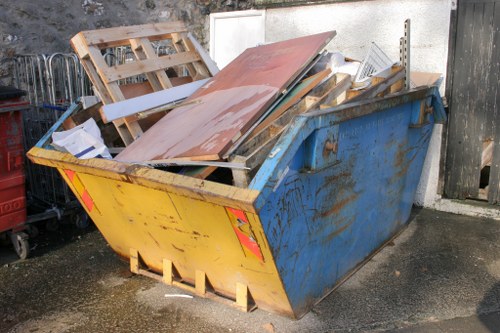
Outdoor spaces can hold far more than people expect, so a house clearance may extend beyond the main building. Garden and shed contents often include damaged furniture, broken planters, sacks, timber offcuts, tools, children’s play equipment and weathered household goods. Where these items have built up over time, a planned removal can make the outside of the property easier to manage and prepare for maintenance or sale.
Our garden clearance work can be useful when outdoor items need removing alongside the contents of the house itself. The key practical considerations are access, ground conditions and whether the items are light, bulky or awkward to move. If there are multiple storage points, such as a shed, side return and rear garden, it helps to identify them before the job begins so the work can proceed in the right order.
We also see many properties where outdoor contents have become mixed with domestic clearance work, especially after long-term storage or a tenancy ending. In those cases, separating what belongs indoors from what belongs outside is mostly a question of organisation. A good plan avoids repeated lifting and makes it easier to clear the property without unnecessary disruption to the rest of the site.
Flat clearance and access-led jobs
A house clearance service often overlaps with flat, maisonette and apartment work, particularly where access is shared or stairs are involved. In smaller properties the challenge is usually not the number of rooms but the way items must be moved through communal spaces. A flat clearance can include furniture, appliances and general domestic contents, with attention paid to entrances, lifts, stairwells and timing around neighbours or building rules.
Access-led jobs are best planned carefully because a compact property can still contain a large volume of items once cupboards, wardrobes and storage furniture are opened up. It is sensible to flag any parking limits, step-free access issues, loading restrictions or security arrangements when you ask for a price. That gives a clearer basis for scheduling and helps avoid hold-ups on the day. If there are items that need dismantling, say so early rather than assuming they can be carried as they are.
The most efficient flat clearances usually combine sorting and removal in one process, but the sequence matters. Smaller loose items should not be left behind while bulky pieces are taken first, and communal areas should stay protected as far as possible. Careful handling matters just as much in a compact flat as it does in a larger house, especially where walls, bannisters and floors are easily marked.
Pricing factors and quotation details

House clearance pricing depends on practical details rather than a single fixed formula. The amount of material, the type of items, the ease of access and any special handling all affect the work involved. A property with straightforward ground-floor access is different from one with multiple flights of stairs, narrow passages or heavy furniture that must be manoeuvred carefully. Where there are mixed items, the time needed for sorting can also influence the quotation.
Our pricing and quotes page is useful if you want to understand how estimates are put together before you enquire. In general, the more accurately the property and contents are described, the easier it is to suggest a realistic figure. It helps to mention the type of property, whether the clearance is partial or complete, and whether there are bulky items, access limits or any pieces that need to be left in place. Clear information up front reduces the chance of last-minute changes.
For the best quotation discussion, try to group the main items by room and note anything that may affect labour or loading. If you are unsure whether an item should be classed as furniture, mixed waste or something else, just describe it plainly. A simple, honest description is usually enough for a useful estimate, and you can refine the details when the job is arranged.
Office, business and builder-related removals
Although this page focuses on house clearance, some customers also need related removal work from other premises. That may include a small office, a storage room attached to a property, or clearance work after maintenance and refurbishment. If you are dealing with desks, chairs, filing items or general business contents, it can be helpful to look at our office clearance service, which covers a similar need for careful removal and orderly handling.
For commercial or renovation-related materials, there may be a different mix of items and a different loading pattern. Office work often involves furniture and mixed equipment, while renovation jobs may create packaging, offcuts or general debris rather than domestic possessions. We also provide builders waste clearance for jobs where the main issue is construction-related material that needs taking away without complicating the rest of the property clearance. Keeping these categories separate can make the quotation more accurate and the job easier to plan.
Where a property has both household contents and a non-domestic area, it is often simplest to describe each space in turn. That way the clearance can be staged properly and there is less risk of overlooking items that belong to a different area of the building. A concise room list, with any special access notes, is usually enough to shape the next step.
How the clearance is organised
Most customers want a process that is clear, tidy and not overly complicated. Typically, the first step is to identify the areas involved and confirm what needs to stay, what is being removed and whether there are any items requiring special attention. That may include fragile possessions, heavy furniture, boxes of mixed contents or pieces that are awkward to move through the property. The goal is to turn a broad request into a workable plan.
It also helps to think about preparation in a practical way. If possible, separate any items to be kept from the material that is going, and note whether parking, access or timings could affect the job. If you are unable to sort everything beforehand, that is not a problem; the point is simply to make the brief as accurate as possible. Two things save most time: a clear room-by-room outline and a realistic idea of how much is involved.
Once the scope is understood, the clearance can usually be arranged in a sequence that suits the property. That may mean beginning with larger furniture, moving through main rooms and then finishing with cupboards, lofts or external storage. If there is a practical reason to tackle a particular area first, mention it when you ask for a quotation so the plan can be adjusted accordingly.
About Seven Sisters
Seven Sisters sits in north London and is closely associated with the wider Tottenham area, though the name is used in different ways by residents, transport users and local businesses. The area takes its name from an old tree landmark and later became known through the road junction and transport hub that connect it to surrounding parts of the borough. Today it lies within the London Borough of Haringey and is recognised for its busy high street, varied housing stock and strong transport connections, including rail, Underground and bus links. The local built environment reflects layers of change, from Victorian and Edwardian terraces to later infill and redevelopment, with streets that still show the long history of suburban growth in this part of north London.
The neighbourhood is also shaped by nearby landmarks and public spaces. Down the road, Finsbury Park and the New River corridor form part of a wider network of green and blue spaces that have long influenced movement and settlement across the district. Tottenham High Road and the routes that meet around Seven Sisters have historically been important commercial and travel corridors, linking local shopping, markets and everyday services. The area’s architecture is mixed rather than uniform, with older mansion blocks, terraced housing and modern developments sitting alongside industrial and retail uses. That variety gives Seven Sisters a dense urban character, while its transport role continues to make it a well-known point on the map of inner north London.
Furniture disposal and recycling choices

Some house clearances involve items that are no longer wanted but still need handling in the right way. That is where a furniture disposal service can be helpful, especially when pieces are damaged, heavy or difficult to move on through ordinary household channels. Sofas, cabinets, tables and beds may all require separate judgement depending on condition, material and how they are stored within the property.
We also offer recycling and sustainability information for customers who want to understand broader disposal decisions. In practice, a clearance often combines different streams of material, and not every item is treated in the same way. Some pieces may be suitable for reuse, some may need disposal and some may be separated because of their material type or condition. The important point is to identify the contents clearly so they can be managed with care.
If you are ready to move forward, send a clear summary of the rooms and items and we can discuss the next step. For a quotation or to make an initial enquiry, contact us here and include any access notes, bulky items or special instructions that may affect the work.